



Remembering David Hockney: The Boy from Bradford Who Painted the Truth.
David Hockney packed his brushes away yesterday. He made it to eighty-eight, a good stretch for a working-class lad born among the damp cobbles and grey skies of Bradford.
He swapped the Yorkshire rain for the chlorine-sharp light of California, but he kept his Northern grit intact. He spent seven decades grafting at the easel. There was never any pretension with David. He was just a man with thick round glasses and a flat cap who wanted to look at the world properly and show us the vibrant colours we kept missing.
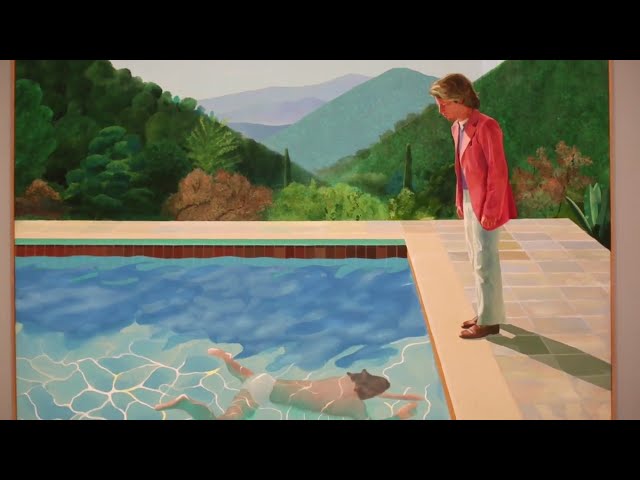
He painted swimming pools, rolling hills, and his friends. He built stage sets. When his legs gave out, he sat in an armchair and drew on an iPad. The medium never mattered to him; the work did.
I spent a good few years breathing in the fumes of their shared history when I wrote 'The Highs and Lows of a Legendary Fashion Designer'. Digging into Ossie Clark's life meant digging into David's life too. They were bound together by talent, ambition, and a fierce friendship that survived the absolute chaos of the sixties and seventies.
I still walk the same Notting Hill streets they did, looking at the same brickwork, trying to understand how a couple of working-class boys managed to conquer London with nothing but a sketchpad and a pair of shears.
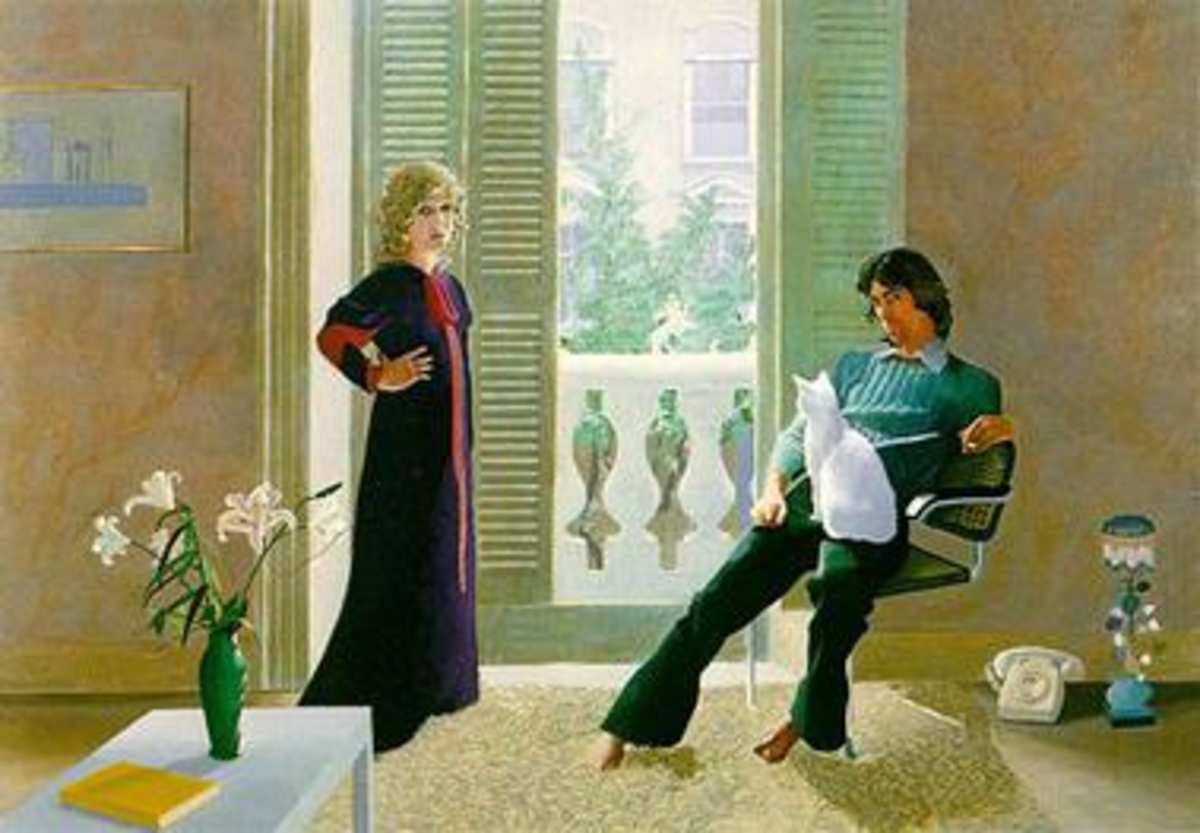
You see the depth of their bond in that famous double portrait of Ossie and Celia Birtwell. They married in 1969, and David stood right beside them as best man. A year later, he set them down in acrylic paint inside their Notting Hill flat. He completely ignored the tired rules of painting a happy couple. You look at those old aristocratic wedding portraits, where the man stands tall while the woman perches quietly on a velvet cushion. Hockney reversed the roles. Celia stands up straight, barefoot, anchored to the floorboards. She looks right at you. Ossie slouches in his chair, toes curling in the deep rug, looking like a bloke waiting for the rain to stop.
There is a white cat sitting on Ossie's lap. The Tate Gallery plaque calls the animal Percy, but the cat was actually named Blanche. Hockney changed the name simply because he thought 'Percy' had a better ring to it. It was a quiet joke hidden in plain sight.
He painted more than a living room in that piece; he painted an ending. A massive open window sits right between the husband and wife, splitting the canvas in two. It creates a physical gap you could walk straight through. He placed lilies next to Celia to mark her pregnancy and her quiet strength. He parked that cat on Ossie's lap to signal wandering eyes and petty envy. David felt the fractures in their relationship long before they shattered. He knew the marriage would crumble, and he mapped it out for everyone to see.
Four years later, they filed the divorce papers. Hockney simply watched, recorded the unvarnished truth, and hung it on the wall for the world to scrutinise.
We lost a proper genius yesterday. London feels a little less colourful today, but the paint he left behind will never fade.
Celia Birtwell: The Woman Behind the Flowers, the Fashion and Four Generations of Creativity
"Fashion fades, but true style—and family—leave a legacy that lasts forever."
There are names in British fashion that instantly transport us to another time.
Mary Quant.
Vivienne Westwood.
Ossie Clark.
And woven through that remarkable story, like the delicate floral patterns that became her trademark, is Celia Birtwell.
For more than six decades, Celia has inspired designers, artists and fashion lovers with prints that are instantly recognisable. Romantic yet modern. Delicate yet powerful. Timeless rather than fashionable.
Yet beyond the catwalks, museum exhibitions and celebrity admirers lies another story.
A story about a little girl from Lancashire.
A young woman who fell in love with one of Britain's greatest fashion designers.
A mother raising two sons after heartbreak.
And today...
A proud grandmother watching a new generation carry creativity into a completely different world.
This is the story of Celia Birtwell.
A Northern Beginning
Celia Birtwell was born on 2 January 1941 in Bury, Lancashire, before growing up in nearby Prestwich.
Britain was still at war.
The world looked very different.
Nobody could have imagined that the little girl who loved drawing would one day help define an entire era of British fashion.
Her father was an engineer with a love of culture.
Her mother was a gifted seamstress whose sewing fascinated young Celia from an early age.
Without knowing it, her parents were giving their daughter the perfect education.
One understood structure.
The other understood fabric.
Celia inherited both.
By the age of thirteen she was already studying textile design at Salford, where she immersed herself in drawing, colour and pattern. Her inspirations ranged from classical art to painters such as Picasso and Matisse—an influence that remained visible throughout her career. (Wikipedia)
Meeting the Boy Called Ossie
In 1959 she met a teenage fashion student named Ossie Clark.
At first they were simply two ambitious young creatives from the North trying to make their mark.
Years later, after both had moved to London, they met again.
This time everything changed.
They fell in love.
Even more importantly...
They discovered they worked brilliantly together.
Ossie understood shape.
Celia understood pattern.
He cut dresses with astonishing precision.
She covered them with unforgettable prints.
Separately they were talented.
Together they became legendary.
Their collaboration for the Quorum boutique helped redefine British fashion, turning catwalk presentations into glamorous cultural events attended by musicians, actors and artists. (Wikipedia)
Dressing the Swinging Sixties
Soon everyone wanted an Ossie Clark dress.
But every great dress needed a great print.
That was Celia's gift.
Her floating florals and romantic designs perfectly matched Ossie's elegant cuts.
The result?
Fashion history.
Their clothes were worn by rock stars, models and actors including members of the Rolling Stones, the Beatles, Jimi Hendrix, Marianne Faithfull, Bianca Jagger and Twiggy. They became symbols of the optimism and freedom of late-1960s London. (Wikipedia)
Marriage and Motherhood
In 1969 the couple married.
That same year they welcomed their first son, Albert Clark.
A few years later came their second son, George Clark.
Life appeared almost magical.
Successful careers.
Beautiful clothes.
Celebrity friends.
A famous home.
But photographs rarely tell the whole story.
Behind closed doors, the pressures of fame and the strains within the marriage grew.
By 1974 the relationship had ended.
Celia suddenly found herself rebuilding her life as a single mother with two young boys. (Wikipedia)
Choosing Family First
Many people expected Celia to continue chasing the excitement of the fashion world.
Instead...
She chose her children.
She stepped away from the centre of fashion and devoted much of her energy to raising Albert and George while gradually rebuilding her own career through interior textiles.
It wasn't the glamorous choice.
But perhaps it was the bravest.
Those who know Celia often describe her as warm, practical and quietly determined.
The spotlight never seemed as important as home.
That decision shaped the rest of her life. (The Guardian)
The Famous Painting
Even people who don't know Celia's name have probably seen her face.
In 1970–71, her close friend David Hockney painted "Mr and Mrs Clark and Percy."
The portrait has become one of Britain's most celebrated modern paintings and hangs in Tate Britain.
The painting captures a young married couple at the height of their creative powers.
Looking at it today feels almost like opening a family photograph album frozen in time.
What viewers cannot see is everything that happened afterwards.
Two sons growing up.
Grandchildren arriving.
A remarkable life continuing long after the paint dried. (Wikipedia)
Starting Again
Rebuilding a life is never easy.
Yet Celia managed it with grace.
She opened her own interiors business in west London, creating fabrics that brought her unmistakable style into homes as well as wardrobes.
Decades later, younger generations rediscovered her work through collaborations with major retailers, proving that truly great design never goes out of fashion. (Wikipedia)
Albert and George
Although Albert and George grew up surrounded by artists, musicians and designers, they have generally kept much of their private lives away from the public eye.
That has always reflected Celia's approach.
She has protected her family from unnecessary publicity.
What is known is that both sons remained an important part of her life, and her wider family has grown to include six grandchildren. (The Guardian)
A New Generation: Lola Clark
One granddaughter has stepped into the public spotlight.
Lola Clark belongs to a generation that expresses creativity very differently.
Instead of fashion shows...
Social media.
Instead of magazine covers...
TikTok.
Lola has built a substantial online following, sharing fashion, humour and everyday life with millions of viewers.
It's a remarkable contrast.
Her grandmother became famous through printed textiles.
Lola has become known through digital storytelling.
Different worlds.
The same creative spark.
In recent interviews, Celia has spoken affectionately about photographing her granddaughters for Instagram and has described Lola as the youngest of her six grandchildren. She has also mentioned granddaughter Tilly Clark, a student at Central Saint Martins with an interest in fashion. (Yahoo)
A Family of Creatives
Looking across four generations, one thing becomes clear.
Creativity keeps reappearing.
Not always in the same form.
Not always in the same career.
But always with imagination.
Celia drew flowers.
Ossie sculpted dresses.
Their descendants have explored modern media, fashion and design in their own ways.
Every generation writes its own chapter.
Still Inspiring
Today, Celia Birtwell is celebrated not only as one of Britain's greatest textile designers but also as a woman who combined extraordinary creativity with resilience.
Her prints continue to appear in exhibitions, books and collaborations.
Young designers still study her work.
Collectors treasure her fabrics.
Fashion historians regard her partnership with Ossie Clark as one of the defining creative collaborations of the twentieth century.
Yet if you ask many admirers what they love most about Celia, it is not simply the flowers she drew.
It is the life she built.
She weathered personal loss.
Raised two sons.
Became grandmother to six.
And remained curious, creative and unmistakably herself.
A Legacy Woven Through Generations
Legacies are often measured in awards, exhibitions or sales.
Celia Birtwell's can certainly be measured that way.
Her work changed British fashion.
Her prints became iconic.
Her portrait hangs in one of the nation's greatest galleries.
But perhaps her most enduring legacy cannot be framed on a museum wall.
It lives in her family.
In Albert.
In George.
In six grandchildren.
And in young women like Lola Clark, proving that creativity never stands still—it simply finds a new generation.
From Lancashire schoolgirl...
to textile pioneer...
to devoted mother...
to cherished grandmother...
Celia Birtwell's story reminds us that the most beautiful patterns are not always printed onto silk.
Sometimes...
they are woven through the generations of a family.