https://www.prisonersabroad.org.uk/
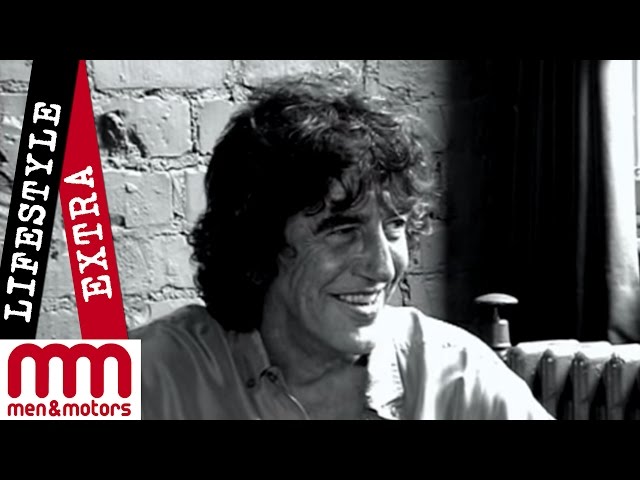

Finsbury Park isn’t exactly where you’d go looking for a miracle, but that’s where Prisoners Abroad has been holding the line for years. For me, they were the bridge back to reality. When I finally got out of the General Penitentiary in Jamaica and landed back in London, the air felt thin and the streets felt too fast. When you’ve been locked up overseas, you don't just walk back into your old life; you’re like a ghost in your own town. The team on Fonthill Road were the ones who put a hand out and helped me find my feet while I was still shaking off the heat and the grit of a Jamaican cell.
Real Help Since '78
Prisoners Abroad didn't start in some fancy boardroom with a massive budget. It kicked off in 1978 because a few people realized that Brits locked up in foreign holes were being completely forgotten. By 1980, they were a proper charity, and they’ve been doing the hard graft ever since.
Let’s be honest: it’s not easy raising funds for "unsuccessful drug smugglers." Most people want to give their money to cute animals or kids' sports teams. They don't usually line up to help blokes who’ve sat in a foreign cell for making a bad call. But Prisoners Abroad doesn't judge. They deal in the basics that keep a person from sinking—housing, paperwork, and making sure you don't fall through the cracks of a system that isn't built for people like us.
Me and Mr. Nice
I’d known Howard Marks for twenty years. To the rest of the world, he was the big-time smuggler from the "Mr. Nice" posters, but to me, he was a proper mate and an absolute gentleman. He even came out to visit me while I was stuck in the General Penitentiary in Jamaica. Sitting there in that heat, we didn't just talk about the past; we planned for the future. We cooked up a plan right there in the prison for a gig as soon as I got out.
True to his word, we did exactly that. In 2005, not long after I was released, we put on a show at the Inn on the Green in Notting Hill. It was a massive night—raw, honest, and exactly what was needed to kickstart the fundraising. Howard had done a long stretch in the States, so he knew the score. He knew that bone-deep loneliness of being a Brit in a foreign prison, wondering if anyone back home actually gave a toss.
The Gigs and the Graft
Our fundraisers weren't posh affairs. They were gritty nights in clubs and backrooms. We weren't looking for sympathy; we were looking for survival money for the ones still stuck inside.
The Shows: We’d travel around, doing these talks, sharing the raw truth about what happens behind those foreign gates.
The Mission: Every penny went back to Finsbury Park to pay for things like "Coming Home" kits—the stuff you need when you land with nothing but the clothes on your back.
Howard helped me out in plenty of ways over the years before he passed away. He’d check in, give me some straight-talking advice, or just sit and have a chat when things felt heavy. He had a lot of heart for a man who’d seen the sharp end of life.
Keeping the Memory Alive
Howard isn't around anymore, and the world feels a bit quieter without him. He was a diamond who never looked down on anyone. But the charity is still there in Finsbury Park, doing the same work they’ve been doing since the late seventies.
I’m proud of the time we spent raising those funds. We took our history—the good, the bad, and the Jamaica sun—and turned it into something that helped the next person coming off that plane with a heavy heart and empty pockets. Howard would’ve been glad to see the work carrying on.
If you want to see the work they do or lend a hand to the people nobody else wants to help, check them out .https://www.prisonersabroad.org.uk/
Dennis Howard Marks, famously known by his alias Mr. Nice, was a Welsh drug smuggler, author, and counter-culture icon. At the height of his career, he was one of the most prolific cannabis traffickers in the world, famously operating without the use of violence.
Early Life and Education
Born in Kenfig Hill, Wales, Marks was an academically gifted student. He secured a place at Balliol College, Oxford, where he earned a degree in physics in 1967. It was during his time at Oxford that he was first introduced to cannabis, a discovery that would eventually redirect his life from academia to international smuggling. He continued his studies in the philosophy of science at the University of London and the University of Sussex before turning to full-time trafficking.
The Smuggling Empire
Starting in the early 1970s, Marks built a sophisticated global network. He was master of the invisible operation, utilizing:
1. 43 Aliases: His most famous, Mr. Nice, was taken from a passport he bought from a convicted murderer, Donald Nice.
2. Front Companies: He controlled 25 companies and used 89 separate telephone lines to coordinate shipments.
3. Global Reach: He moved massive quantities of hashish and marijuana (claiming shipments up to 30 tons) from countries like Pakistan, Thailand, and Lebanon into the UK and the US.
4. High-Level Connections: Marks claimed ties to organizations as diverse as MI6, the CIA, the IRA, and the Mafia, often playing different sides against each other to facilitate his trade.
Arrest and Imprisonment
His luck ran out in 1988 when he was arrested in Spain following a massive investigation by the American Drug Enforcement Administration (DEA). Extradited to the United States, he was sentenced to 25 years in prison. He served seven years at Terre Haute Federal Penitentiary in Indiana and was released on parole in 1995 for good behaviour.
Later Life and Mr. Nice
Upon his release, Marks reinvented himself as a writer and public speaker.
1. Autobiography: In 1996, he published Mr. Nice, which became an international bestseller and a definitive text of the cannabis counter-culture. It was later adapted into a 2010 film starring Rhys Ifans.
2. Advocacy: He became a tireless campaigner for the legalisation of cannabis, even standing for Parliament in four separate constituencies in 1997 on that single issue.
3. Entertainment: He toured a successful one-man show, recounting his smuggling adventures with his trademark wit and grit.
Death
In early 2015, Marks announced he had been diagnosed with inoperable colorectal cancer. He faced the diagnosis with characteristic lack of regret, stating he was happy with the life he had lived. He passed away on 10 April 2016, at the age of 70, in Leeds, England.