
The New Oasis Documentary, Liam and Noel Gallagher and the Reunion That Brought a Generation Back Together
There are bands you grow out of.
There are bands you forget.
Then there are bands that get stitched into your life.
Oasis are one of those bands.
You can go years without listening to them.
Then somebody puts on the opening chords of a song in a pub and, suddenly, you're back there.
Different clothes.
Different hair.
Different life.
Same bloody song.
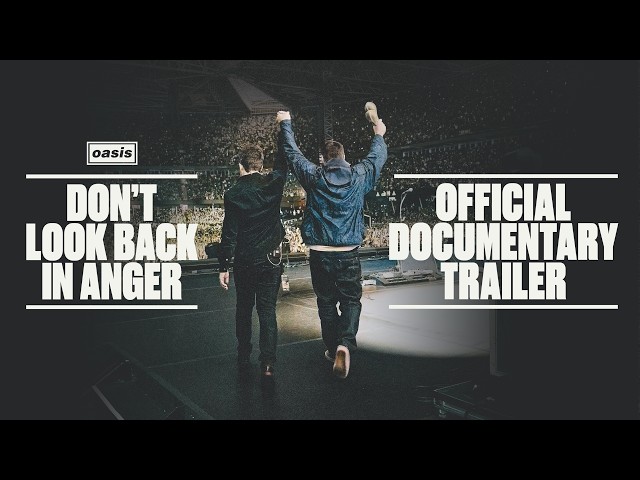
Now, in September 2026, Oasis return to the cinema with a new documentary, Oasis: Don’t Look Back In Anger.
And I reckon this one is worth paying attention to.
Not simply because it's Oasis.
Because it's about what happened when two brothers who spent years at war finally stood on the same stage again.
Image
Image
Image
Image
Image
Oasis Were Never Just Another Rock Band
When Oasis arrived in the 1990s, they didn't look like a carefully assembled pop product.
They looked like lads from Manchester who had discovered they could write songs.
And they weren't interested in behaving themselves.
Definitely Maybe came out in 1994 and kicked the door open.
Then What's the Story Morning Glory? turned Oasis into one of the biggest bands in Britain.
Suddenly you couldn't escape them.
The records were everywhere.
The pubs were full of them.
Football terraces were full of them.
Every bloke with a cheap guitar seemed to be attempting Wonderwall.
And underneath all the hype was something simple.
People liked the songs.
They were big songs.
Simple songs.
Songs you could sing after six pints.
Songs you could shout with 50,000 other people.
Songs that didn't require a university degree in music to understand.
That's part of why Oasis mattered.
They belonged to people.
Liam and Noel Gallagher
Of course, Oasis always came with a problem.
Two brothers.
Liam Gallagher.
Noel Gallagher.
Both stubborn.
Both talented.
Both convinced they were right.
Put them together and you got one of the most successful British rock bands of all time.
Put them in a room together and you never quite knew what was going to happen.
The arguments became legendary.
The interviews became entertainment in themselves.
The insults kept coming.
Eventually, in 2009, Oasis collapsed after another confrontation between the brothers before a scheduled performance at Rock en Seine in Paris.
Noel walked away.
And for years, that looked like the end.
Sixteen Years Later, Oasis Came Back
Then something happened that many people thought would never happen.
Oasis reunited.
In 2025, Liam and Noel Gallagher finally walked onto a stage together again for the Oasis Live '25 tour.
Sixteen years had passed since the split.
The reaction was enormous.
And I don't think you can explain it simply as nostalgia.
People weren't only going to hear old Oasis songs.
They were going to reclaim a bit of their own lives.
The teenager who bought Definitely Maybe in 1994 was now taking his own children to see Oasis.
People who weren't even born when Oasis played Knebworth finally got their chance.
Parents brought sons and daughters.
Old fans stood alongside new ones.
Oasis had somehow crossed generations.
And that is what makes the documentary particularly interesting.
Oasis: Don’t Look Back In Anger Documentary
The new Oasis documentary follows the Oasis Live '25 reunion tour and gives viewers access to the band away from the stage.
That includes rehearsal footage, backstage material, performances and joint interviews with Liam and Noel.
Disney describes those interviews as the brothers' first joint interviews in more than 20 years. (Disney UK)
That's the bit I'm most interested in.
Because we've heard the arguments.
We've heard Liam's side.
We've heard Noel's side.
We've watched journalists pick apart every bloody sentence.
Now we get to watch the two brothers sitting together and talking about Oasis.
That's potentially more revealing than another concert film.
The Oasis Reunion Was About More Than Music
The Oasis Live '25 reunion became one of the biggest cultural events of 2025.
But why?
Because Oasis aren't simply a band from the past.
They're part of people's personal history.
You might remember your first Oasis album.
Your first gig.
Your first girlfriend or boyfriend.
The pub where everyone sang Wonderwall.
The summer when Don't Look Back in Anger seemed to be playing everywhere.
The people you were with.
The people who aren't around anymore.
That's what music does.
It stores memories.
You can forget a face.
You can forget an address.
You can forget what you were doing on a particular night.
Then a song comes on and suddenly you're back there.
Oasis have a lot of that power.
Don't Look Back In Anger
And then there's the song itself.
Don't Look Back in Anger has become much bigger than Oasis.
You hear it in pubs.
At football matches.
At parties.
At funerals.
At moments when a crowd needs something everybody knows.
It's one of those songs where you don't need an introduction.
The first few notes start.
Someone begins singing.
Then another person joins in.
Then suddenly everybody is shouting the words.
That's a hell of a thing for a rock song to achieve.
And now Oasis have named their documentary after it.
The title feels appropriate.
Because the whole story comes back to one question.
Can you look back at everything that went wrong without letting the anger win?
Steven Knight Takes On Oasis
The documentary comes from Steven Knight, the writer and creator behind Peaky Blinders and A Thousand Blows.
Dylan Southern and Will Lovelace direct the film. They previously worked together on music documentaries including Shut Up and Play the Hits and Meet Me in the Bathroom. (UK Press)
That combination interests me.
Knight understands British working-class characters.
He understands complicated families.
He understands ambition.
He understands people who don't always behave themselves.
And that's Oasis.
I don't want some polished corporate documentary where everyone sits around telling us how brilliant everybody was.
I want the reality.
The arguments.
The nerves.
The awkward moments.
The rehearsals.
The uncertainty.
The two Gallagher brothers trying to work together again after sixteen years apart.
Why Oasis Still Feel Working Class
Oasis became incredibly successful.
They sold millions of records.
They played enormous stadiums.
They became global stars.
But they never completely lost the feeling of where they came from.
That's important.
Oasis didn't arrive looking like rock royalty.
They looked like ordinary northern lads who had somehow found a way out.
That made people believe they could do it too.
You didn't need to come from money.
You didn't need a famous surname.
You needed songs.
A guitar.
A bit of attitude.
And enough bloody determination to keep going.
That was the dream.
And Oasis lived it.
Knebworth
Knebworth still sits at the centre of the Oasis story.
August 1996.
Two huge shows.
Hundreds of thousands of people.
Oasis at their absolute peak.
For those who were there, it became part of their personal history.
For those who weren't, it became one of those legendary British music moments you wished you'd experienced.
But here's the interesting thing.
Nearly 30 years later, the songs still work.
That's the real test.
Not awards.
Not magazine covers.
Not record sales.
Put Oasis on in a pub tonight.
Somebody will sing.
Then somebody else.
Before long, half the bloody room will be involved.
September 2026
Oasis: Don’t Look Back In Anger receives its world premiere at the Venice International Film Festival before opening in cinemas and IMAX.
Disney's current UK listing gives the release date as 9 September 2026. (Disney UK)
Disney's July announcement confirms the film will open in selected IMAX cinemas from 9 September, before streaming later on Disney+. (UK Press)
So this isn't just another music documentary turning up quietly on a streaming service.
They're putting it on the big screen.
And I think that's the right way to see it.
Oasis were never really a headphones band.
They were a crowd.
A sweaty pub.
A football terrace.
A field full of people.
A few beers.
A guitar.
Thousands of voices coming back at the stage.
That's Oasis.
The Brothers Are Back
That's what makes this whole thing slightly surreal.
For years, people asked:
Will Oasis ever reunite?
The answer seemed obvious.
No.
Then they did.
The brothers spent 16 years apart.
Now they're standing next to each other again.
Playing the songs that made them famous.
Walking onto stages in front of tens of thousands of people.
And somehow it works.
Nobody could have guaranteed that.
Nobody knew whether it would happen.
Nobody knew whether Liam and Noel could actually get through a tour without killing each other.
But they did it.
Don't Give Us The Sanitised Version
That's my hope for this documentary.
Don't give us the cleaned-up version.
Don't pretend Oasis were always happy.
They weren't.
Don't pretend Liam and Noel always agreed.
They obviously didn't.
Don't pretend the split didn't hurt.
It did.
Show us what happened.
Show us what it took to get them back together.
Show us the human side of it.
Because underneath the songs and the money and the fame, this is still a story about two brothers.
Two brothers who built something enormous together.
Two brothers who destroyed it.
Two brothers who spent years apart.
And two brothers who eventually decided to walk back onto a stage together.
Why I'll Be Watching
I'm old enough to remember Oasis when they first appeared.
I remember the noise.
The attitude.
The arguments.
The clothes.
The haircuts.
The pub conversations about whether Oasis were brilliant or completely overrated.
Usually both sides were convinced they were right.
And that's exactly why the band worked.
They weren't tidy.
They weren't polite.
They weren't perfect.
They were loud, funny, arrogant, talented, frustrating and sometimes completely ridiculous.
In other words, they were human.
And perhaps that's why Oasis never really disappeared.
The music stayed.
One More Time
Some bands become nostalgia.
Some bands become museum pieces.
Oasis somehow became part of people's lives.
That's why the reunion mattered.
That's why people travelled across countries to see them.
That's why parents took their children.
That's why people who had never seen Oasis in the 1990s finally got their chance.
And that's why this documentary could be something special.
Because it isn't simply about Oasis coming back.
It's about what Oasis meant to the people who grew up with them.
It's about friendship.
Family.
Fame.
Failure.
Reconciliation.
And the strange power of a few guitar chords to drag an entire generation back to somewhere they thought they'd left behind.
So in September, I'll be there.
Give me the guitars.
Give me the noise.
Give me the rows of people singing.
Give me Liam and Noel sitting across from each other trying to explain how they managed to break something so bloody good in the first place.
Then let the music start.
Because some bands disappear.
Oasis didn't.
They just took the long way round.
And after everything they've been through, perhaps the best thing they could do was exactly what the title says.
Don't look back in anger.
Just turn the bloody amp up.
August 19, 2026
OASIS NEW DOCUMENTARY DON'T LOOK BACK IN ANGER OUT IN SEPTEMBER 2026