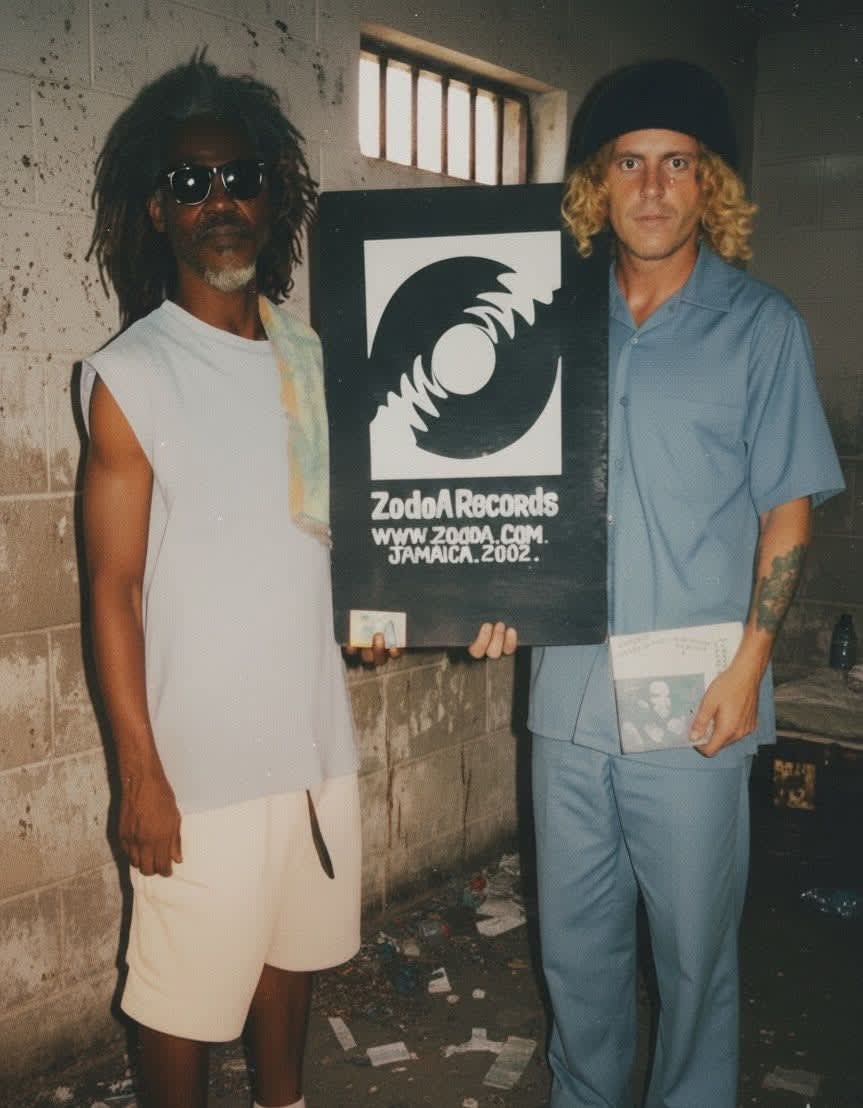


Dennis “Leppo” Lobban: The Man Behind the Headlines
Some names walk into a room ten minutes before the man does.
Dennis “Leppo” Lobban was one of those names.
Long before I clapped eyes on him inside General Penitentiary in Kingston, Jamaica, I knew the name.
Leppo.
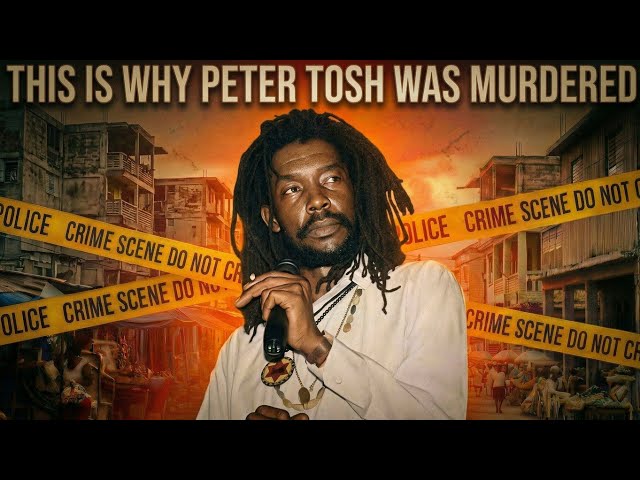
The man convicted of the murders of Peter Tosh, Jeff “Free I” Dixon and Wilton “Doc” Brown.
Three dead men.
One of them a reggae legend whose voice had travelled far beyond Jamaica.
A murder trial.
A death sentence.
Years of appeals.
Then life imprisonment.
That was Dennis Lobban on paper.
But paper is a funny thing.
It can tell you what a court decided. It can tell you what a newspaper printed. It can give you dates, charges, sentences and photographs.
What it cannot tell you is the shape of a man.
It cannot tell you how he speaks.
It cannot tell you how he moves.
It cannot tell you what happens when a steel door slams shut and a man is left staring at the same four walls day after day.
And it certainly cannot tell you that Dennis Lobban was a small-framed, wiry Jamaican bloke who spoke in thick, unmistakable patois and spent hours exercising inside his cell as though he was trying to beat the prison itself into submission.
It cannot tell you that he was a dub poet.
Or that he never played an instrument.
No guitar.
No bass.
No drums.
His instrument was his voice.
And it cannot tell you that inside one of Jamaica's most notorious prisons, Dennis Lobban and I ended up making art together in The Bloom of Light.
That is the Dennis I remember.
Not the newspaper headline.
The man.
Peter Tosh and the shadow that followed him
To understand why Leppo's name carried such weight inside General Penitentiary, you have to understand who Peter Tosh was.
Peter Tosh was not simply another reggae singer.
He was one of the original Wailers alongside Bob Marley and Bunny Wailer, before carving out his own career as one of Jamaica's most uncompromising voices.
The Stepping Razor.
His music was political, angry and direct.
He sang about oppression, racism, Babylon, police brutality, poverty and liberation. He did not wrap his message in pretty paper to make it easier for people to swallow.
He said what he thought.
Then, on 11 September 1987, Peter Tosh was shot dead at his home in Kingston.
Jeff “Free I” Dixon and Wilton “Doc” Brown were also killed.
Jamaica was stunned.
The reggae world was stunned.
And Dennis Lobban became forever attached to the story.
Lobban maintained that he was innocent and offered an alibi. The prosecution's case said otherwise, and in June 1988 he was convicted and sentenced to death.
The sentence was later commuted to life imprisonment.
Whatever the arguments surrounding the case, whatever anyone personally believes about Lobban's guilt or innocence, there is one thing I can say with certainty.
I was not there that night.
I did not see what happened inside Peter Tosh's home.
I met Dennis Lobban years later inside General Penitentiary.
That distinction matters to me.
I knew the prisoner.
I did not witness the crime.
General Penitentiary
General Penitentiary was not somewhere you simply went.
You entered it.
There is a difference.
Once those gates closed behind you, the outside world seemed to move somewhere else.
The air changed.
The light changed.
Even time changed.
An hour outside could disappear without you noticing.
Inside, an hour could feel like a bloody week.
The prison was packed with men carrying stories, reputations and histories that could fill books.
Some men looked dangerous.
Some men did not.
Some men were frightening before they even opened their mouths.
Leppo's reputation had arrived long before he did.
But then you actually looked at the bloke.
He was small.
Lean.
Wiry.
Almost delicate-looking until you saw the muscle packed onto his frame.
There was nothing soft about him.
He was obsessed with fitness.
While other prisoners found ways to kill time, Leppo found ways to use it.
Inside his cell he exercised relentlessly.
Press-ups.
Sit-ups.
Dips.
Repetition after repetition.
Again.
Again.
Again.
The heat inside the prison could be savage. Sweat ran freely and the concrete seemed to hold the heat long after the sun had gone down.
But Leppo kept going.
He would work himself until his body was drenched.
Then he would do it again.
I never pretended to know exactly what was going on inside his head.
Maybe exercise gave him control.
Maybe it gave him somewhere to put the anger.
Maybe it simply stopped the hours becoming unbearable.
A prison can take almost everything from you.
Your freedom.
Your privacy.
Your choices.
Your future.
But for those few minutes inside a cell, Leppo still controlled his own body.
That mattered.
Then he started speaking
The first thing that struck me was his voice.
Leppo spoke proper Jamaican patois.
Not the cleaned-up version people sometimes use when they know outsiders are listening.
His patois was thick, fast and full of rhythm.
And that rhythm became important.
Because Leppo was a dub poet.
He never needed a guitar.
Never needed a bass.
Never needed a drum kit.
He could create rhythm with language.
He understood timing.
He understood repetition.
He understood how a word could land.
His voice had weight.
You could hear the music in it without there being a musical instrument anywhere near him.
That was what he brought to The Bloom of Light.
And that is where the story gets strange.
Because if you described it to someone who had never been inside prison, they might think you were making it up.
A group of prisoners inside General Penitentiary.
In Kingston.
Behind walls and razor wire.
Creating music and poetry.
And among them was Dennis “Leppo” Lobban, the man whose name had become inseparable from one of the most notorious murders in Jamaican music history.
Yet that is exactly what happened.
The Bloom of Light
Prison does something strange to creativity.
It can crush it.
But sometimes it can also force it out.
When every ordinary escape route has been taken away, the imagination becomes somewhere else to go.
Inside The Bloom of Light, we could create.
For a little while, the prison disappeared.
The walls were still there.
The guards were still there.
The sentences were still there.
But they were pushed into the background.
We were not numbers.
We were not case files.
We were not convictions.
We were men making something.
That distinction might sound small to somebody on the outside.
Inside prison, it wasn't.
It was everything.
Leppo brought his voice.
That patois.
That rhythm.
Those words.
And beneath it all was the knowledge of who he was supposed to be according to the outside world.
A killer.
A lifer.
The man convicted in the Peter Tosh case.
You could not simply erase that.
Nor should you.
Peter Tosh was dead.
Three men were dead.
Families had been left behind.
A musical giant had been taken from the world.
There is no poem that changes that.
No piece of music that changes it.
No prison friendship that changes it.
But human beings are rarely as simple as the labels we put on them.
The man behind the conviction
That is one of the uncomfortable things about prison.
You meet people after the headlines.
You meet them when the television cameras have gone.
When the newspapers have moved on to the next murder.
When the public has forgotten the details.
You meet the bloke sitting opposite you.
You hear him laugh.
You hear him swear.
You hear him talk about food.
You see him exercising.
You hear his stories.
You watch him make mistakes.
You see him have a laugh.
You see the human being.
That does not mean the past disappears.
It doesn't.
It means you are looking at a human being in the present while knowing there is a past attached to him.
Those two things can exist at the same time.
Life is rarely tidy enough to separate people into saints and monsters.
We like simple stories.
Good guy.
Bad guy.
Victim.
Villain.
End of story.
Real life is uglier than that.
People can do terrible things.
People can make terrible mistakes.
People can be convicted of terrible crimes.
And those same people can still possess humour, creativity, intelligence, kindness, talent and an extraordinary ability to survive.
Acknowledging that does not excuse anything.
It simply recognises that a human being is more complicated than a headline.
A voice behind the bars
When I think about Dennis Lobban now, I don't first see the murder headlines.
I see the frame.
Small.
Wiry.
Sweat running down his body as he hammered through another set of press-ups inside his cell.
I hear the patois.
I hear the rhythm.
I hear the dub poetry.
And I remember a man who never needed an instrument because his voice was enough.
The Bloom of Light gave that voice somewhere to go.
That matters to me because prison is designed to make time meaningless.
You wake up.
You eat.
You wait.
You move when somebody tells you to move.
You wait again.
Days become weeks.
Weeks become years.
Eventually time itself becomes another wall.
Creating something punches a hole through that wall.
For a few minutes, you are no longer waiting.
You are doing.
You are thinking.
You are making.
You are alive.
Peter Tosh's music survived
Peter Tosh's legacy does not belong to Dennis Lobban.
It belongs to Peter.
His music survived him.
His voice survived him.
His politics survived him.
His songs travelled further than any bullet ever could.
That is the great thing about music.
You can kill the man.
You cannot necessarily kill the song.
And somewhere inside General Penitentiary, in the heat and sweat and madness of prison life, the voice of another man carried through the walls.
Dennis “Leppo” Lobban.
The convicted prisoner.
The small-framed Jamaican dub poet.
The fitness fanatic hammering himself through another hundred press-ups.
The man whose name had been printed across newspapers years before I ever met him.
I knew the name before I knew the man.
Inside GP, I got to know the man.
I never forgot the name.
I never forgot the crime.
I never forgot Peter Tosh.
But I also cannot forget the human being standing in front of me.
That is the uncomfortable truth of memory.
It does not always give you the clean ending you want.
It leaves you with contradictions.
With questions.
With people who cannot be neatly filed away.
Dennis Lobban was one of those people.
And when I think of him now, I hear the voice before I see the face.
Patois rolling across the prison.
Words becoming rhythm.
Rhythm becoming poetry.
Poetry becoming music.
And for a little while, behind those walls, we made something out of the darkness.
That was Dennis “Leppo” Lobban as I knew him.
Not the headline.
Not the legend.
Not the verdict.
The man.
And the voice.
September 24, 2026
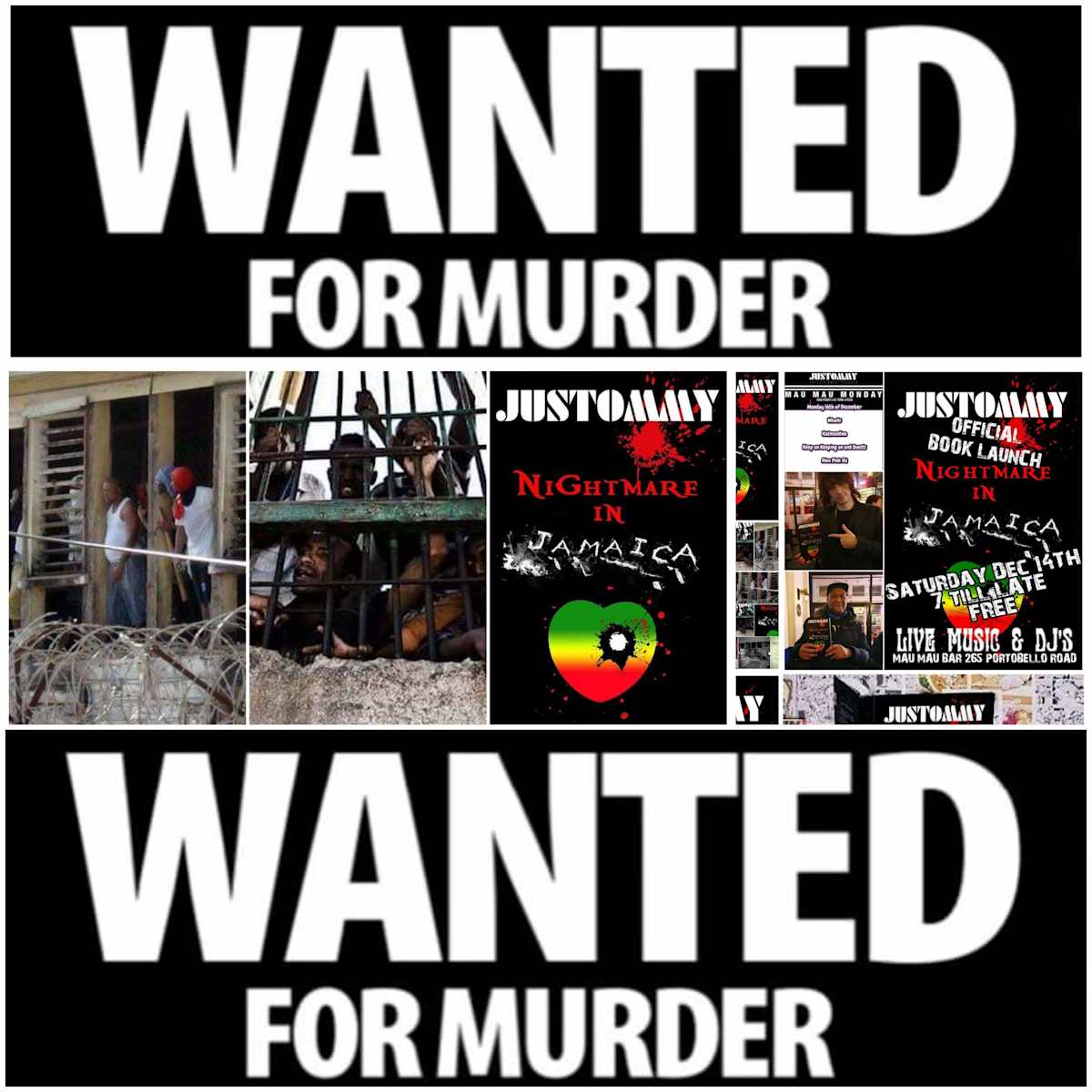
PETER TOSH AND THE MAN CONVICTED OF HIS MURDER DENNIS LEPPO LOBBAN 39 YEARS IN CAPTIVITY GENERAL PENITENTIARY KINGSTON JAMAICA NIGHTMARE IN JAMAICA 1987 - 2026