
How I got into the music industry through ,Stage Miracles, and how you can get your foot in the door
You don't always get into the music business through the front door.
Sometimes you come in through the back.
No record deal.
No industry
No fancy music degree.
No bloke in a leather jacket telling you that you've got "the look".
Sometimes you start with a job that sounds about as glamorous as cleaning out a skip.
And that's exactly why it can work.
I know because I've done it.
Before I was promoting bands, managing musicians and spending years knocking around the London rock ’n’ roll scene, I worked as a production runner for Stage Miracles.
And that job took me into a world most people never see.
The world behind the stage.
The world where the lorries arrive before sunrise, where somebody has forgotten something important, where a production manager is trying to solve three problems at once and where thousands of people will eventually walk into a venue having absolutely no idea how much work went into making the bloody thing happen.
That's where I learned something important.
The music industry isn't just musicians.
It's an army.
And somebody has to make the army work.
STAGE MIRACLES: FROM THREE BLOKES TO THE BIG TIME
Stage Miracles was established in 1977 by three friends who met at Middlesex University: Martin Knight, Clive Ambler and Les Clifford.
The company began with those three men and grew into one of Britain's established event personnel and crew companies.
According to Stage Miracles itself, its staff have worked across major stages with major artists, while its production teams have been involved in European and world tours and major one-off events.
The company specifically cites work connected with artists and events including Iron Maiden, Prince, Live Aid and the Prince's Trust.
And here's the bit I find most interesting.
Stage Miracles openly describes itself as having been a way into the entertainment industry for aspiring production managers and touring professionals.
That's not marketing fluff I've invented for this article.
That's the company's own history.
People got onto the books, learned the trade, picked up experience, made contacts and moved on to bigger jobs.
The music business has always worked like that.
You learn by being around people who know what they're doing.
MY FIRST LOOK BEHIND THE CURTAIN
I wasn't walking into Stage Miracles thinking I was about to become the next Keith Richards.
I was working.
That's an important distinction.
As a production runner, you become part of the machinery.
You're there to make things happen.
You might be driving.
You might be collecting equipment.
You might be taking people somewhere.
You might be finding something that somebody suddenly needs.
You might be dealing with suppliers.
You might spend half a day doing something completely unglamorous and then suddenly find yourself standing backstage while one of the biggest acts in the world is about to walk on.
That was the education.
Not a classroom.
Not a textbook.
The real thing.
I worked on major productions including tours involving Madonna and U2.
And you quickly realise that the people you see on stage are only the visible tip of the iceberg.
Behind them are production managers, stage managers, runners, stage hands, drivers, technicians, riggers, catering crews, wardrobe people, security and dozens of other people whose names the audience will never know.
They're the ones who make the show possible.
YOU DON'T HAVE TO BE A MUSICIAN
This is the bit I'd tell anyone reading this who wants to get into the music industry.
Don't obsess about getting a job with a record label.
Don't sit at home waiting for somebody to discover your talent.
Look at the infrastructure.
Look at the people who actually make live music happen.
Stage Miracles currently lists a whole range of specialist roles, including:
Runners
Catering Assistants
Stage Hands
Production Assistants
Production Managers
Stage Managers
Forklift Operators
Ground Riggers
Spotlight Operators
Wardrobe Assistants
The company also supplies specialist crew and event personnel across productions of different sizes. (Stage Miracles)
That's a lot of different doors into the same building.
And some of those doors don't require you to be a musician at all.
THE CANTEEN COULD BE YOUR FIRST GIG
Here's one that people might overlook.
Catering assistant.
Sounds miles away from rock ’n’ roll, doesn't it?
It isn't.
Stage Miracles describes its catering assistants as working across shows, festivals and stadium events. The work can include food preparation, serving and kitchen cleaning, often under pressure and dealing with large numbers of people.
It also says its catering staff are experienced with food hygiene and working in difficult conditions and long hours.
In other words, you are not there for a picnic.
You're there to work.
But here's the beauty of it.
You're inside.
You're working on productions.
You're meeting crew.
You're seeing how the business operates.
And if you've got the right attitude, people remember you.
That's how careers are built.
Not always through one massive break.
Sometimes through somebody saying:
"That kid's reliable. Give him another shift."
Then another.
Then another.
And suddenly you're in.
WHAT DOES A RUNNER ACTUALLY DO?
The word "runner" can make the job sound like you're going to spend your day jogging around with a clipboard.
Forget that.
A good runner is useful.
Stage Miracles says its runners can be licensed to drive different types of vehicles and that they provide cars, vans and multi-passenger transport. The company also emphasises their knowledge of venues, suppliers and local areas.
That's important.
Because touring is logistics.
Someone needs collecting.
Something needs delivering.
Someone needs taking somewhere.
Something needs finding.
A venue needs navigating.
A supplier needs dealing with.
A problem needs solving.
And often it needs doing yesterday.
The best runners become invaluable because they don't just wait for instructions.
They think.
STAGE HANDS: THE REAL WORK STARTS HERE
If you don't mind physical work, another route is becoming a stage hand.
Stage Miracles describes stage hands as the backbone of its business and says they work across areas including backline, PA, lighting, staging, climbing, rigging, show calls, changeovers and general site work.
It also makes something very clear.
Character matters.
The company says it looks for people with good character and a positive attitude, alongside the necessary skills and training.
That's worth remembering.
You can teach someone a lot of technical things.
It's harder to teach somebody to turn up on time, graft, keep their mouth shut when discretion matters and not become a liability when everyone is under pressure.
SO HOW DO YOU ACTUALLY GET IN?
This is where I want to be practical.
Don't send some enormous email explaining how you've loved U2 since you were twelve.
Don't tell them you're "passionate about the music industry" and leave it at that.
Everybody is passionate.
Tell them what you can actually do.
Can you drive?
Say so.
Have you got a clean licence?
Say so.
Are you physically fit and happy doing manual work?
Say so.
Have you worked in kitchens?
Say so.
Got food hygiene training?
Put it on the CV.
Forklift licence?
Put it at the top.
Experience with events?
Tell them where and when.
Used to working long hours?
Say it.
Reliable?
Prove it with your work history rather than writing the word "reliable" fourteen times.
And don't underestimate the value of being prepared to start at the bottom.
WHERE TO CONTACT STAGE MIRACLES
Stage Miracles currently lists its headquarters at:
Stage Miracles Ltd
Woodlands School Road
Little Heath
Potters Bar
Hertfordshire
EN6 1JW
The company lists its general email as mail@stagemiracles.co.uk and its telephone number as 01707 662 500.
It also has a contact form on its website. (Stage Miracles)
If you're serious about trying to get onto the books, check the company's current requirements and contact details before applying rather than relying on an old job advert floating around the internet.
Stage Miracles official website
DON'T EXPECT GLAMOUR
Let me kill another myth.
Working in live music isn't permanently standing backstage drinking free beer.
It's early mornings.
It's late nights.
It's heavy lifting.
It's waiting around.
It's getting shouted at when somebody is under pressure.
It's travelling.
It's bad weather.
It's muddy festivals.
It's loading in.
It's loading out.
And sometimes it's doing something incredibly boring for twelve hours so that somebody else can have the time of their life for two.
But then there are moments.
The doors open.
The lights go down.
The crowd erupts.
And you know you played a tiny part in making that happen.
That's the drug.
I LEARNED MORE BEHIND THE STAGE THAN I EVER COULD HAVE IN THE AUDIENCE
Working for Stage Miracles gave me a different education.
I saw how big productions actually worked.
I learned about timing.
Organisation.
People.
Pressure.
And most importantly, I learned that the music business isn't some mysterious castle guarded by people in suits.
It's full of ordinary people doing extraordinary amounts of work.
People who drive.
People who cook.
People who build.
People who carry.
People who organise.
People who solve problems.
People who know which door to knock on.
And sometimes those people eventually become the people running the show.
Stage Miracles itself says many industry professionals started on its books before going on to become prominent figures in the business.
That's the bit young people should pay attention to.
The first job doesn't have to be your dream job.
It can be your way in.
FROM STAGE MIRACLES TO STEVE DIOR
Years later, I'm still in the music business.
I'm now managing artists, promoting shows and writing about music.
I've worked with young bands.
I've watched musicians go from tiny rooms to much bigger stages.
I've spent years around the grassroots end of London rock ’n’ roll.
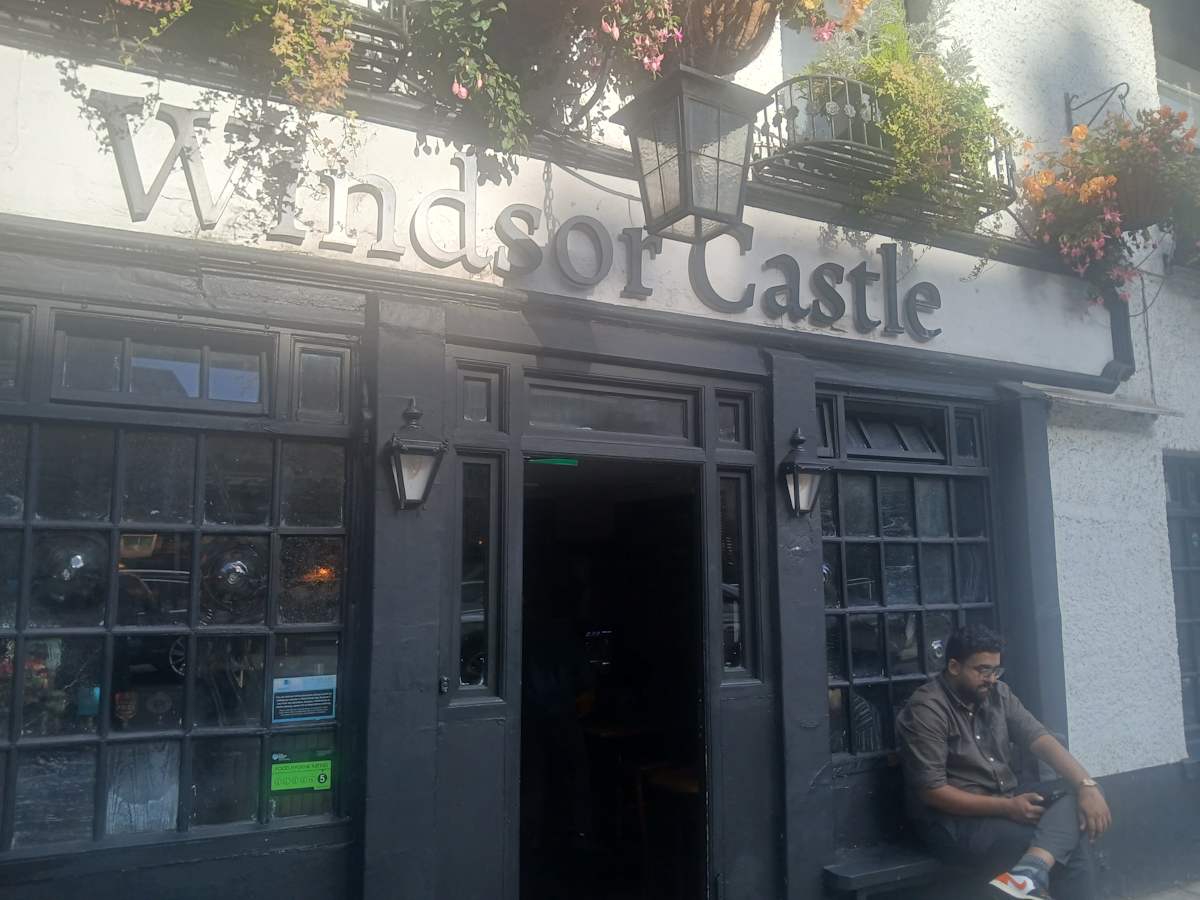
And recently I found myself sitting in a pub in Kensington talking music with Patrick, a label president, Adam and Lucy.
We ended up talking about Steve Dior.
And I found myself talking about the same world I'd first entered decades earlier from the other side of the curtain.
Steve's story is another example of how strange this business can be.
The London Cowboys.
The Idols.
Jerry Nolan.
Johnny Thunders.
New York.
London.
Mexico.
Songs that slipped through the cracks.
And now new music.
That's rock ’n’ roll.
It doesn't always travel in a straight line.
Neither do the people who work in it.
THE BACK DOOR IS STILL OPEN
If you're young and trying to get into the music business, here's my advice.
Stop waiting for somebody to discover you.
Find out who is actually doing the work.
Find the crew companies.
Find the venues.
Find the promoters.
Find the production companies.
Find the festivals.
Find the people who build the stages before the bands arrive.
And get yourself useful.
You might start in a canteen.
You might start carrying cases.
You might start driving a van.
You might start sweeping a stage at six in the morning.
You might think you've taken the wrong job.
You haven't.
You're inside.
You're watching.
You're learning.
You're meeting people.
And if you're good at what you do, people notice.
That's how I got in.
Not through the front door.
Through the back.
And sometimes the back door is where the real story starts.
September 17, 2026
STAGE MIRACLES ARE YOU LOOKING FOR A JOB IN THE MUSIC INDUSTRY