

FROM KENTISH TOWN TO VIETNAM — FROM A TOASTER OVEN AND A PUSHBIKE TO A FACTORY FULL OF PEOPLE
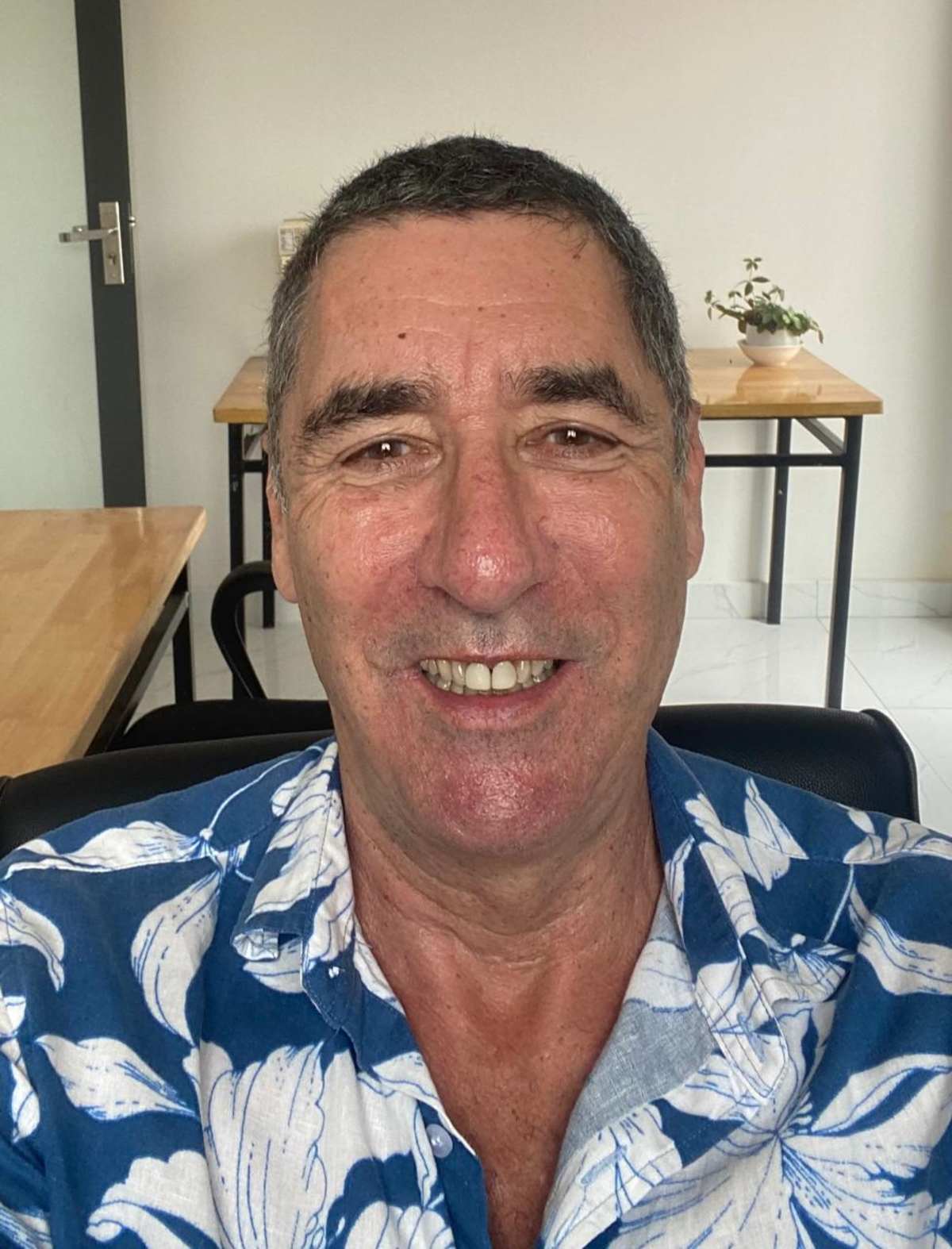
Yesterday I met Peter Gluckstein over a beer.
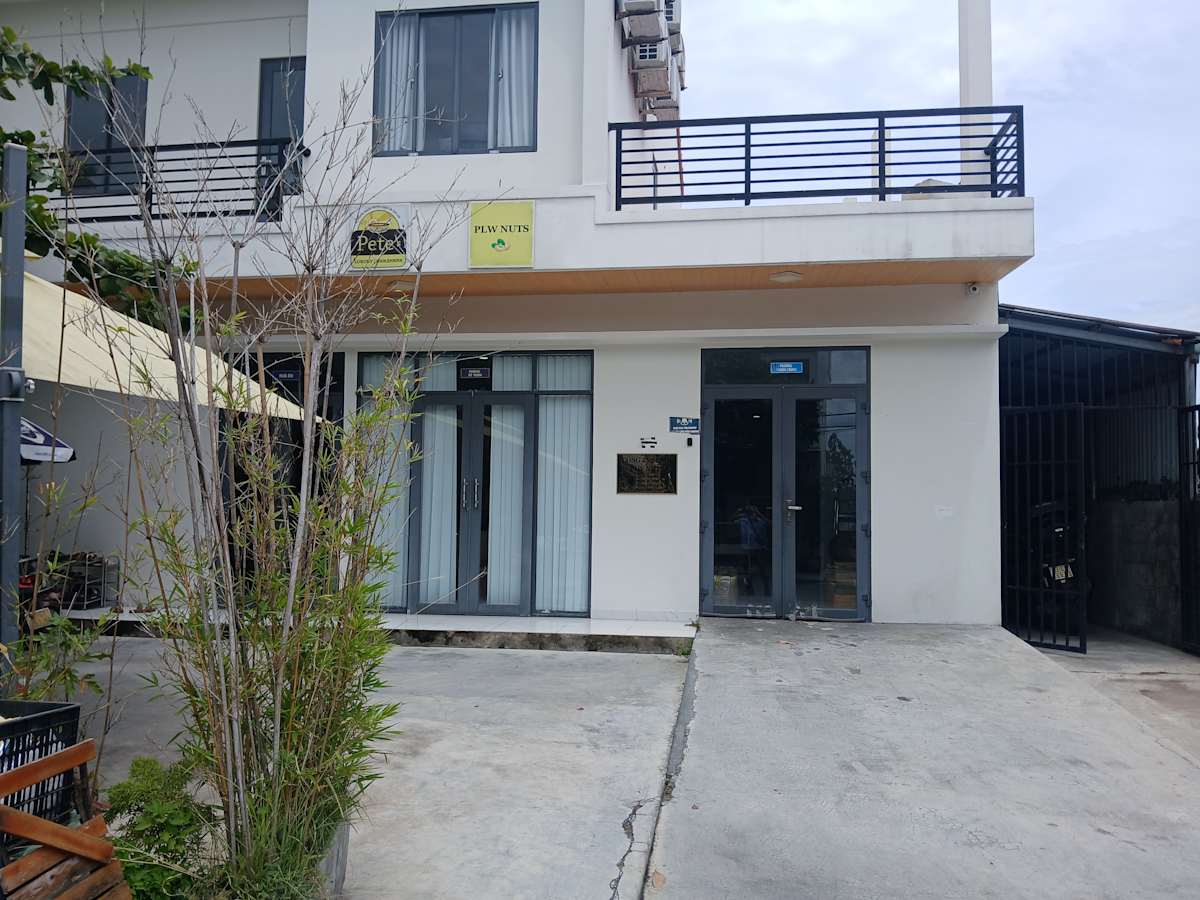
Today I was walking around his factory.
That's Vietnam for you.
You can sit down in a bar with a bloke you've never met, have a couple of beers, start talking bollocks about life, business, London and Vietnam, and before you know it you're standing in a cap and protective clothing being shown around a food factory.
I didn't come to Hội An looking for the Granola King.
I wasn't looking for bloody anything, to be honest.
The best stories usually find you.
And Peter Gluckstein is one hell of a story.
He's a gentleman. A family man. A serial entrepreneur. Former actor. Former clown. Marketing man. Businessman. Traveller. Father.
And a bloke who's made serious money without, as far as I can tell, losing his curiosity about people along the way.
That's what I noticed first.
Some successful people develop that look.
You know the one.
The look that says they've made money and therefore everybody else is an inconvenience.
Peter doesn't have it.
We hit it off because, like a lot of people I've met along the road, he's lived a few lives.
He went to Manchester University in the late seventies. He crossed paths with some serious characters from the British comedy and music world, including Ben Elton, Rik Mayall, Ade Edmondson and Tony Wilson.
He acted.
He was a clown.
He worked in marketing.
He built businesses.
He sold businesses.
He made money.
Then he came to Vietnam.
And somehow, after all that, he ended up making granola.
Not exactly the career plan you put on the school careers form.
THE BREAKFAST PROBLEM
Peter arrived in Hội An in January 2018 with his family.
The idea wasn't to conquer Vietnam.
It wasn't to build an empire.
It wasn't to become the fucking Granola King.
It was a simpler idea.
Slow down.
Live somewhere beautiful.
Watch the kids grow up.
Enjoy life.
But then there was breakfast.
Peter couldn't find the sort of granola he wanted.
The supermarket stuff didn't do it for him.
Too bland.
Too processed.
Not enough flavour.
So, as plenty of us working-class people have done at some point in our lives, [ Peter Is Middle Class ] he thought:
I'll do it myself.
Only Peter actually did.
He found a recipe online and started experimenting.
One batch.
Another batch.
Change the ingredients.
Try again.
More of this.
Less of that.
Eat it.
Decide it isn't right.
Make another one.
For about three months he kept at it.
Eventually he and his wife sat down with one of the better batches.
And somewhere between breakfast and a conversation, the penny dropped.
This might actually be good.
That's how many businesses begin.
Not in a boardroom.
Not with some bloke in a suit talking about scalability.
Not with a venture capitalist throwing money at a PowerPoint presentation.
Sometimes it starts because you're hungry.
THE PUSHBIKE
Peter started small.
Very small.
There wasn't some massive warehouse waiting for him.
There wasn't a fleet of delivery vans.
There wasn't a sales department.
There wasn't a marketing army.
There was Peter.
There was the granola.
And there was a pushbike.
He made the stuff.
Packed it.
Labelled it.
Then got on his bicycle and delivered it himself.
Friends bought it.
Parents at the children's school bought it.
People around Hội An bought it.
Then somebody else wanted some.
Then a shop wanted to stock it.
Then another shop.
And another.
That's how it starts.
One customer.
Then two.
Then suddenly you've got a problem.
A good problem.
People want more of your bloody product.
The little kitchen experiment was turning into a business.
THE MAN WHO ALREADY KNEW HOW TO SELL
Food was new territory for Peter.
Business wasn't.
Before Vietnam, he'd built and sold a successful marketing agency in London.
That mattered.
Because you can make the best granola in the world, but if nobody knows it exists, you've basically got a cupboard full of breakfast.
Peter understood branding.
He understood customers.
He understood presentation.
He understood psychology.
Most importantly, he understood people.
And when you start digging into his past, it all begins to make sense.
The actor learns to read people.
The clown learns timing.
The marketer learns persuasion.
The entrepreneur learns risk.
Life teaches you the rest.
Peter had spent decades collecting those skills without knowing exactly where they would eventually lead him.
Then Vietnam came along.
FROM TOASTER OVEN TO FACTORY FLOOR
This morning Peter took me through the factory.
Properly.
Covered up and dressed for the production floor, he walked me around the operation, explaining what happens and why.
This wasn't the polished version.
This wasn't a bloke standing in front of a shiny machine telling me how successful his company was.
This was the actual bloody work.
He introduced me to members of his staff as we moved around.
Some are related.
Some have been there for years.
People know each other.
People know the routine.
And Peter knows the people.
That's important.
Because when you're looking at a packet of granola on a supermarket shelf, you don't see any of this.
You don't see the hands.
You don't see the checking.
You don't see the repetition.
You don't see the people standing there making sure the product is right.
You tear the packet open and eat it.
THE WORK NOBODY SEES
Peter explained how labour-intensive some of the process can be.
When the raw ingredients arrive, they aren't simply dumped into a machine and forgotten.
The staff go through them.
They sift through the bags.
They check.
They inspect.
They make sure nothing is in there that shouldn't be.
Bag after bag.
Check after check.
It's repetitive work.
And repetitive work is where mistakes happen if people stop paying attention.
That's why the human element matters.
Machines can do plenty.
They can't replace somebody who knows something doesn't look right.
Peter told me that if a member of staff spots something wrong with the product or packaging, they should say so.
Better still, he rewards them for finding problems.
That's good management.
You don't frighten people into silence and then wonder why problems suddenly appear.
You give people a reason to speak.
And you listen.
TWENTY-TWO PEOPLE
Today Peter employs twenty-two local people.
Twenty-two.
Think about that for a minute.
It started because a bloke couldn't find a decent breakfast.
A recipe.
A toaster oven.
A pushbike.
And now twenty-two people have jobs because of it.
That's the bit I find more interesting than the money.
Money is easy to talk about.
Jobs are different.
A job means rent paid.
Food on the table.
Children looked after.
Bills paid.
A bit of security.
Twenty-two families, or twenty-two households, or twenty-two individuals whose lives are connected in some way to an idea Peter had over breakfast.
That's real.
THE PEOPLE ARE THE BUSINESS
Peter calls his staff family.
I've heard that expression from plenty of businessmen.
Sometimes it's genuine.
Sometimes it means:
We're a family until payday.
Peter seems to mean it.
He talks about his staff with affection.
The company has taken them on company-funded trips to celebrate milestones.
He wants people to care about the product.
And he wants them to challenge things when they aren't right.
As he walked me around, it was obvious he wasn't simply pointing at people like pieces of machinery.
That's production.
That's packing.
That's this department.
He knew the people.
He knew the jobs.
He knew where the problems were.
And he knew how much bloody work went into something most people eat without giving it a second thought.
Some of his staff are related.
Others have worked together for years.
There's a familiarity there.
And that matters in Vietnam.
Because there's a big difference between arriving somewhere with money and becoming part of somewhere.
A foreigner can turn up, open a business, employ Vietnamese people and remain completely separate from the community.
Peter's story feels different.
Eight years in Hội An changes you.
You stop being the bloke who arrived from somewhere else.
You know the streets.
You know the shops.
You know people.
You have routines.
You have friendships.
The place starts getting under your skin.
Eventually, Vietnam isn't simply where you live.
It becomes part of what you've built.
A BRITISH IDEA WITH VIETNAMESE HANDS
That's another thing I like about the story.
This isn't simply a British bloke bringing a Western product into Vietnam and selling it to foreigners.
The business has evolved here.
Australian oats.
Vietnamese ingredients.
A recipe developed in Hội An.
Vietnamese staff.
A British entrepreneur.
A Vietnamese business.
That's the interesting bit.
You can't live somewhere for eight years without the place changing you.
And you can't build something in a place without that place getting into the DNA of what you're building.
FROM BICYCLE TO VIETNAM
Within the first year, Peter's products were sold through more than 50 outlets across Vietnam, including Ho Chi Minh City, Hanoi, and Nha Trang.
That's some jump.
One bloke on a pushbike.
One recipe.
One toaster oven.
Then fifty outlets.
Today the business operates as Pete's Luxury Wholefoods here in Hội An.
Peter has even appeared on VTV4's Talk Vietnam. Watch the Video Below
https://vtv.vn/video/talk-vietnam-peter-gluckstein-tam-long-dat-o-doi-tay-710798.htm
The accidental granola business had stopped being an experiment.
It had become a serious company.
And the bloke who started it was now responsible for twenty-two people.
Not bad for breakfast.
BUT THE GRANOLA ISN'T REALLY THE STORY
The granola is just the vehicle.
Peter is the story.
Because before the granola there was everything else.
Actor.
Clown.
Marketing man.
Entrepreneur.
Father.
Husband.
And whatever else life threw at him along the way.
That's a lot of lives for one bloke.
Maybe that's why he can walk into a factory and see things differently.
He's been on stages.
He's been behind desks.
He's built businesses.
He's dealt with people.
He's made mistakes.
He's taken risks.
And he's kept moving.
That's the thing I understand.
You don't have to have one life.
You can have several.
Sometimes the next one starts when you think the previous one is finished.
THE STUFF PEOPLE DON'T SEE
Peter has also spoken openly about abuse he suffered as a child from a teacher.
That's not an easy thing to carry.
And it wasn't his fault.
It never was.
People love success stories when they're clean.
Nice beginning.
Hard work.
Success.
Money.
Happy ending.
Real life doesn't work like that.
Real life is messier.
People carry things.
Some carry them for years.
Some don't talk about them.
Some bury them.
And some eventually find a way to keep walking.
Peter seems to have done that.
He didn't let the worst things that happened to him become the final chapter.
He built.
He worked.
He became a father.
He made businesses.
He came to Vietnam.
He created jobs.
He kept going.
That's resilience.
Not the motivational-poster version.
The real version.
The version where you get up and carry on because life doesn't give a shit whether you're ready.
FAMILY
Recently Peter's wife returned to their home in London with their children so they could have what the family believes is the best education for them.
That's a huge decision.
Especially after eight years building a life in Vietnam.
Peter remains in Hội An.
The business is here.
His family is in London.
And suddenly the successful entrepreneur becomes something much more ordinary.
A dad who misses his kids.
You can build a company.
You can buy property.
You can make money.
You can employ twenty-two people.
You can build a factory.
But none of that buys back time.
You can't manufacture childhood.
You can't send money down a telephone line and replace sitting around a dinner table with your children.
That's the bastard part of life.
Sometimes you can afford everything except the thing you actually want.
I got the impression the separation weighs on him.
Behind the businessman is a father.
And fathers are allowed to miss their kids.
SIXTY-SEVEN AND STILL AT IT
Peter is sixty-seven.
And he's still bloody going.
He's fit.
He walks his dogs.
He plays golf.
He works.
He thinks.
He plans.
He looks ahead.
He also told me that sometimes, despite being fit and reasonably healthy, he has to grab hold of a piece of furniture to steady himself.
That made me laugh.
Because that's sixty-seven.
You've still got the brain of a thirty-year-old entrepreneur, but occasionally the body says:
Steady on, son.
I liked that.
There was no bullshit Superman routine.
No pretending that age doesn't exist.
Peter knows he's sixty-seven.
But his mind clearly hasn't received the memo.
THE DIRTY END OF SUCCESS
There's a load of bollocks talked about entrepreneurship these days.
You see people on social media sitting beside swimming pools telling you how they made millions while travelling the world with a laptop.
That's not entrepreneurship.
That's Instagram.
Real business is less glamorous.
It's invoices.
Suppliers.
Staff.
Packaging.
Machines.
Customers.
Complaints.
Broken equipment.
Late deliveries.
Bad batches.
Bills.
And getting out of bed when you'd rather stay there.
Standing inside Peter's factory brought that home.
People were working.
Standing.
Sorting.
Checking.
Lifting.
Repeating the same jobs over and over.
That's work.
Proper work.
No fucking beach club.
No motivational quote.
No digital nomad bullshit.
Just people doing a job.
And Peter is still close enough to it to see what they're doing.
At sixty-seven he could sit behind a desk and tell other people what to do.
He doesn't.
He's on the factory floor.
WHEN THINGS GO WRONG
Peter is also pretty direct about mistakes.
If something goes wrong, he believes in admitting it and fixing it.
That sounds obvious.
It isn't.
Business can turn people strange.
When everything is going well, everybody wants credit.
When something goes wrong, suddenly nobody knows anything.
Peter seems to take a different view.
Things go wrong.
People make mistakes.
Machines break.
Suppliers screw things up.
Markets change.
Customers complain.
That's life.
The question isn't whether something goes wrong.
The question is what you do when it does.
Take responsibility.
Fix it.
Move on.
That's probably another reason people trust him.
You don't build loyalty by pretending you're perfect.
You build it by being accountable.
THE ACTOR, THE CLOWN AND THE BUSINESSMAN
I keep thinking about Peter being an actor and a clown.
Because maybe that's where some of this came from.
An actor learns to read a room.
A clown learns timing.
A performer learns to deal with failure in front of an audience.
A marketer learns how to persuade.
An entrepreneur learns to gamble on himself.
And somewhere along the line, Peter put all those things together.
Then Vietnam came along and gave him another stage.
Only this time the audience wanted breakfast.
WHAT HAPPENS NEXT?
Peter isn't sitting around polishing the trophy.
He's already thinking about expansion.
Vietnam.
Asia.
Eventually the wider world.
That's the entrepreneur in him.
There's always another problem.
Another market.
Another idea.
Another bloody mountain.
Away from the business, he still enjoys the simple things.
Walking the dogs along the beach.
Playing golf.
Living in Hội An.
Having a beer.
Talking.
Laughing.
Being around people.
This morning, before I left the factory, Peter gave me some samples of his products.
A small gesture.
But I've always believed small gestures tell you something about people.
You learn a lot by watching what somebody does when they don't need anything from you.
WHAT I TOOK FROM IT
The granola isn't really the story.
The transformation is.
A Londoner arrives in Hội An wanting a quieter life with his family.
He can't find the breakfast he wants.
So he makes it.
Then somebody buys it.
Then somebody else.
Then a shop wants it.
Then another.
The toaster oven isn't enough.
The kitchen isn't enough.
The pushbike isn't enough.
Suddenly there are staff.
Machinery.
Packaging.
Distribution.
Factories.
Customers.
Twenty-two employees.
A business.
And the bloke who came to Vietnam to slow down is working harder than ever.
That's entrepreneurship.
Not the bullshit version.
The real version.
You make another batch.
You answer another phone call.
You chase another supplier.
You solve another problem.
You pay another bill.
You find another customer.
You look after your people.
Something goes wrong.
You fix it.
Then you get up and do it all again tomorrow.
THE GRANOLA KING OF HỘI AN
Yesterday I met Peter Gluckstein over a beer.
Today I walked around the factory that grew out of his breakfast problem.
Somewhere between the oats, the machinery, the workers, the packaging and the smell of fresh granola, I realised I wasn't really looking at a food company.
I was looking at a life.
A complicated one.
A life that began in London.
Passed through acting and clowning.
Went through marketing and business.
Made money.
Took knocks.
Became a family life.
Then crossed the world and landed in Hội An.
And somehow, against all the odds, a toaster oven and a pushbike became a factory employing twenty-two people.
That's a fucking journey.
Peter is a gentleman.
A father.
An entrepreneur.
A former actor.
A former clown.
A marketing man.
A businessman.
A survivor.
And a bloke who, despite everything he's achieved and everything he's been through, still seems bloody curious about what comes next.
That's probably why he's not finished.
Not remotely.
His wife and children may currently be in London.
Peter may be here in Hội An.
The distance must hurt.
But he's still moving.
Walking the dogs.
Playing golf.
Running the business.
Talking to his staff.
Thinking about the future.
Building.
Planning.
Dreaming.
Looking beyond Vietnam.
And perhaps that's the biggest lesson in the whole bloody story.
Life doesn't always give you the hand you expected.
Sometimes you get dealt something completely different.
You can sit there complaining about it.
Or you can get on your pushbike.
Peter got on his.
I came to Hội An as a traveller.
I left his factory thinking about breakfast.
But more than that, I left thinking about people.
About second acts.
About survival.
About work.
About family.
About what it means to build something from absolutely fuck-all.
And about the strange places a life can take you if you keep moving.
The best stories aren't always in the tourist brochures.
Sometimes they're sitting beside you in a bar.
Having a beer.
Waiting to be discovered.
Peter, it was an absolute pleasure meeting you.
I don't think the Granola King of Hội An has finished his story yet.
Not by a long shot.
Because if the journey from a toaster oven and a pushbike to a factory full of people has taught us anything, it's this:
The road doesn't give a fuck how old you are.
If you've still got something left in the tank, there's another chapter waiting.
And I reckon Peter Gluckstein has got a few chapters left in him yet.