
The History of London's Greatest Street Party
Sadly, I won't be at Carnival this year because of other arrangements, and I will miss it, but there are certain things you associate with August in London.
Rain.
Rail engineering works.
People complaining about the Tube.
And then there is Notting Hill Carnival.
For two days every August, west London gets turned into something completely different.
The roads fill with steelpan, soca, calypso, reggae, sound systems, jerk chicken, rum, feathers, glitter, enormous costumes and enough bass to make your internal organs consider moving house.
But Carnival did not begin as a tourist attraction.
It did not begin with corporate sponsorship.
It did not begin because somebody in a council office decided London needed a colourful festival.
It came from a community that had plenty to be angry about.
And that makes its story considerably more interesting.
Before Carnival, There Was Claudia Jones
To understand Notting Hill Carnival, you have to go back before Notting Hill Carnival existed.
After the Second World War, Britain needed workers and people arrived from across the Caribbean.
Many settled in London.
Notting Hill became one of the places where Caribbean communities established themselves, built businesses, created music scenes and made a home.
But Britain in the 1950s was not exactly rolling out the welcome carpet.
Racism was widespread.
Housing was poor.
Tensions were growing.
Then, in May 1959, a young Antiguan man named Kelso Cochrane was murdered in Notting Hill in a racially motivated attack. His death deeply affected the local community. (Notting Hill Carnival)
Around the same period, another remarkable woman was already trying to bring Caribbean culture into the heart of London.
Her name was Claudia Jones.
Born in Trinidad, Jones became a journalist, activist and campaigner.
In 1959 she organised a Caribbean Carnival at St Pancras Town Hall.
It was televised by the BBC.
It was not Notting Hill Carnival, but it planted one of the seeds.
(Notting Hill Carnival)
Jones died in 1964, aged just 49.
She never saw the street carnival that eventually carried the culture she championed through Notting Hill.
But her influence remains part of its DNA.
Then Came Rhaune Laslett
By the mid-1960s, Notting Hill remained a crowded, complicated neighbourhood.
Racial tension hadn't disappeared.
Neither had poor housing.
Rhaune Laslett, a local community activist and social worker, wanted to bring people together.
In September 1966 she organised a children's street fair.
Her idea was simple.
Get the local communities into the street.
Give people something to celebrate together.
And see what happens.
Then came the music.
Laslett invited Trinidadian steelpan player Russell Henderson and his band to perform.
Henderson had already been involved in London's Caribbean music scene.
Instead of standing politely in one place, the musicians decided to make a procession.
They put their pans around their necks and walked through the streets.
People followed.
They danced.
They laughed.
They came out of their houses.
And suddenly a small children's event had become something much bigger.
That procession is widely recognised as the beginning of Notting Hill Carnival as we know it. (Notting Hill Carnival)
No grand opening ceremony.
No celebrity host.
No marketing department.
Just people, music and a street.
Sometimes that's all you need.
The Caribbean Takes Over the Streets
The early Carnival grew quickly.
Steelpan remained at its heart.
Then came calypso.
Then reggae.
Then soca.
Then sound systems.
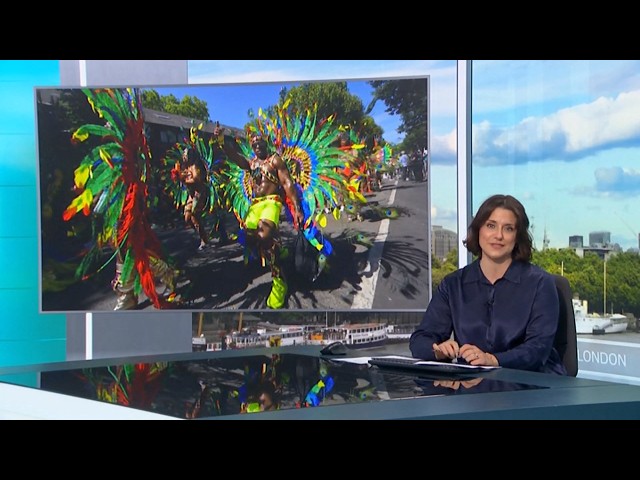
Then mas bands with increasingly spectacular costumes.
The event became a meeting point for London's Caribbean communities and increasingly for people from outside them too.
And this matters.
Carnival was never simply a Caribbean party.
It grew out of a particular community, but it became one of the most multicultural events in Britain.
The streets of Notting Hill became a place where different Londoners could collide, dance, eat, argue, flirt, sweat and occasionally wonder why they had decided to wear a woolly jumper.
Then Things Got Ugly
Carnival's history isn't all feathers and sunshine.
The relationship between Carnival and the police became increasingly difficult.
By 1976, the event had grown enormously.
Around 250,000 people attended that year's Carnival, and approximately 10,000 police officers were deployed.
Crowd control measures divided the Carnival area into sections and restricted movement.
The result was confrontation.
Violence broke out.
The disturbance continued into the following day. (London City Hall)
For many people in the Caribbean community, the problem wasn't simply what happened that year.
It was what Carnival represented.
A black cultural event taking over the streets of an area where racial tensions had already been running high.
Police-community relations remained difficult during subsequent Carnivals, with serious confrontations also occurring in 1977, 1981 and 1989. (London City Hall)
The 1970s therefore became a crucial period.
Carnival was growing.
So was the argument over who had the right to occupy the streets.
And Then the Music Got Louder
By the 1980s, the sound systems had become an essential part of Carnival.
This changed everything.
You could walk around Notting Hill and suddenly hear a wall of bass coming from a street corner.
One system playing reggae.
Another playing soul.
Another playing dub.
Another playing the latest Caribbean sounds.
You didn't need a ticket.
You didn't need a VIP wristband.
You followed the noise.
And there was plenty of noise.
The sound system became more than entertainment.
It became part of Carnival's identity.
Costumes, Steelpan and Mas
Then there is the visual side.
If the sound systems give Carnival its guts, the mas bands give it its colour.
Mas comes from masquerade traditions in the Caribbean, particularly Trinidad and Tobago.
Designers create elaborate costumes.
Dancers rehearse.
Bands compete.
Music drives the procession.
And thousands of people transform the streets into something that looks like somebody has tipped the contents of a Caribbean carnival into West London.
Except there is a lot more organisation behind it than you might think.
There are bands.
Judging.
Routes.
Sound systems.
Steel orchestras.
Food traders.
Security.
Medical teams.
Marshals.
Police.
Residents.
Volunteers.
And an enormous amount of work happens long before the first dancer appears.
Notting Hill Becomes a London Institution
By the 1990s and 2000s, Carnival had become internationally famous.
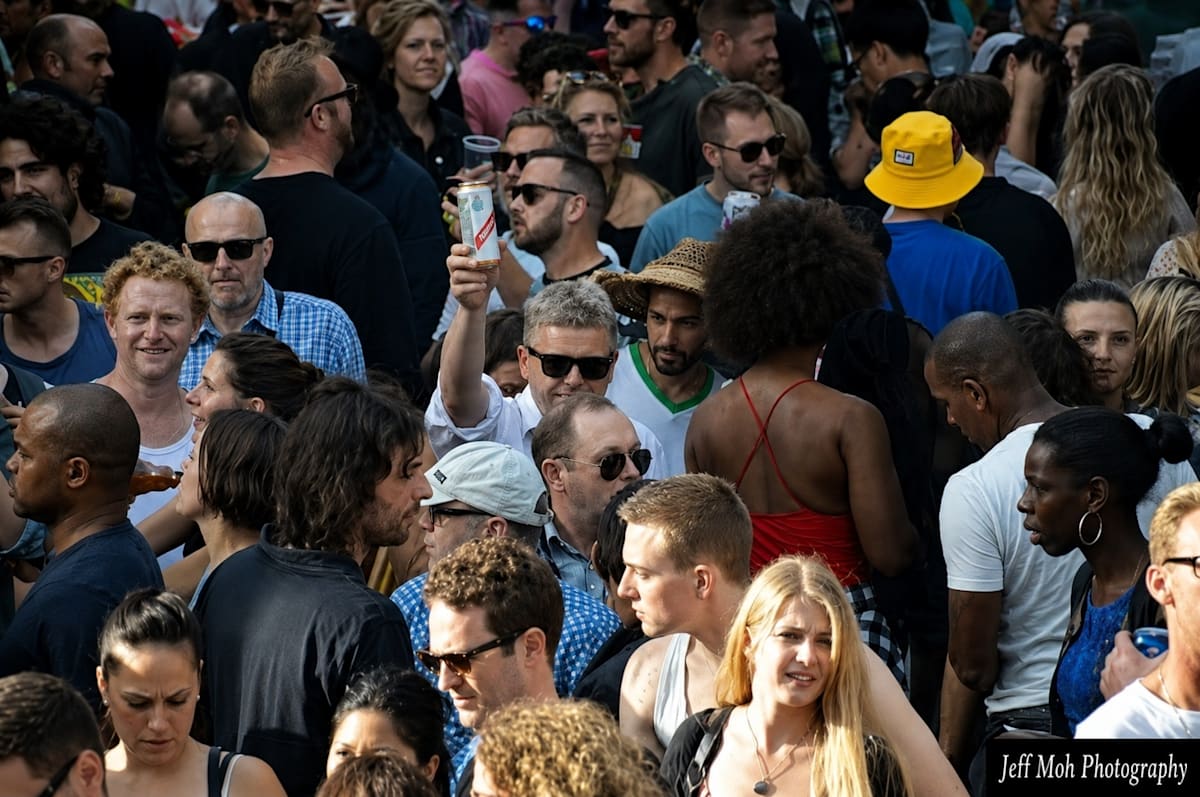
Tourists began arriving in huge numbers.
Londoners from every background joined in.
The event became an important part of London's cultural identity.
But its success created a problem.
The streets were never designed for millions of people.
What began as a local community celebration had become one of the world's largest street festivals.
And the bigger it became, the harder it became to manage.
That tension remains today.
Carnival And Controversy
It would be dishonest to write about Notting Hill Carnival without mentioning violence.
Most people attend to have a good time.
But a tiny minority have caused serious problems over the years.
The Metropolitan Police figures published by City Hall show that 2025 recorded 528 arrests, 49 reported assaults, four knife crime incidents and no fatalities. The same data records two fatalities in 2024 and one in 2022. (London City Hall)
Those numbers deserve attention.
So does the other side of the story.
Millions of people have attended Carnival without becoming victims, committing offences or getting into trouble.
The vast majority go for the music, food, dancing, costumes and atmosphere.
Reducing Carnival to crime statistics misses the entire point.
It would be like describing Wembley Stadium solely by counting the number of people who have been thrown out.
Covid Changed The Calendar
Then came 2020.
The streets went quiet.
Notting Hill Carnival was cancelled because of the COVID-19 pandemic.
The same happened in 2021.
For an event built around people occupying the streets together, there was simply no safe way to do it normally.
(London City Hall)
When Carnival returned, it felt like London had got a piece of itself back.
Carnival Today
Today, Notting Hill Carnival attracts more than a million people and contributes hundreds of millions of pounds to London's economy.
City Hall estimates the economic contribution at around £396 million. (London City Hall)
The organisers describe it as Europe's largest cultural event and the world's second-largest carnival. (Notting Hill Carnival)
And now, in 2026, Carnival reaches a rather extraordinary milestone.
Sixty years.
The Diamond Jubilee.
The official programme runs from Saturday 29 August through Monday 31 August.
Saturday features the UK National Panorama steelband competition.
Sunday brings J'ouvert, Children's Day, the children's parade, mas, sound systems and stages.
Monday is the main adults' day, with the big parade, mas, sound systems and live music. (Notting Hill Carnival)
Sixty years.
Think about that.
The little street party organised by Rhaune Laslett in 1966 has survived racial tension, police battles, political arguments, commercialisation, safety concerns and a global pandemic.
And it is still here.
The Price Of Getting Bigger
Carnival's success has created new challenges.
More people means more pressure.
More pressure means more safety requirements.
And in 2026, the Mayor of London announced an additional £4.66 million in funding to support Carnival's safety and crowd-management improvements, on top of £946,300 already committed by City Hall. (London City Hall)
That's a lot of money.
But then again, this isn't a village fete anymore.
It is one of the biggest public events in Europe.
You can't squeeze more than a million people into west London and simply hope everybody remembers to behave themselves.
But Don't Lose The Point
This is the bit I think gets lost.
Notting Hill Carnival isn't really about feathers.
It isn't really about sound systems.
It isn't even really about the food.
Those things are the visible part.
Underneath all of it is something much more important.
Community.
A group of people who arrived in Britain from the Caribbean and built lives in a country that didn't always want them there.
They brought their music.
Their food.
Their religion.
Their language.
Their humour.
Their families.
Their traditions.
And eventually they brought them into the street.
The street became the stage.
The stage became Carnival.
And Carnival became London.
Sixty Years Later
There's something beautifully working class about the whole story.
Nobody waited for permission.
People made things happen.
A woman organised a children's party.
A steelband turned up.
Somebody decided to walk down Portobello Road playing pan.
People followed.
And six decades later, millions of people know the name Notting Hill Carnival.
That's how culture grows.
Not always from the top.
Usually from the bottom.
From ordinary people doing something because they believe it matters.
The Funny Thing About Carnival
Of course, there is another side to it.
You can spend weeks arguing about policing.
You can have academic conferences about Caribbean identity.
You can publish books about its cultural significance.
You can discuss the economics until everyone falls asleep.
Then Carnival arrives.
And some bloke in a massive feathered costume walks past carrying a rum punch the size of a flower vase while somebody's sound system tries to rearrange the foundations of West London.
Suddenly the academic debate seems slightly less important.
You dance.
You eat.
You sweat.
You laugh.
You get lost.
You find yourself again.
And eventually you realise you've been walking around in circles for three hours and you're standing exactly where you started.
That's Carnival.
From Claudia Jones To 2026
Claudia Jones planted one of the early seeds.
Rhaune Laslett created the street event that brought people together.
Russell Henderson and his steelband supplied the sound that sent people into the street.
The Caribbean community gave Carnival its heart.
Generation after generation added something.
Steelpan.
Calypso.
Soca.
Reggae.
Dub.
Sound systems.
Mas.
Food.
Fashion.
Dance.
Politics.
And a very British ability to queue for something while simultaneously complaining about the queue.
Today, Notting Hill Carnival belongs to London.
But it should never forget where it came from.
It was born from migration.
It grew through community.
It survived conflict.
And it turned resistance into celebration.
That's why it matters.
Not simply because it is Europe's biggest street festival.
Not simply because millions turn up.
Not simply because the bass can probably be heard from Mars.
It matters because somebody once looked at a divided neighbourhood and decided to put on a party.
Sixty years later, London is still dancing.
And as long as the steelpan keeps playing, the sound systems keep firing, and people keep filling the streets, Notting Hill Carnival isn't history.
It's still happening.
Official Notting Hill Carnival history and 2026 programme